
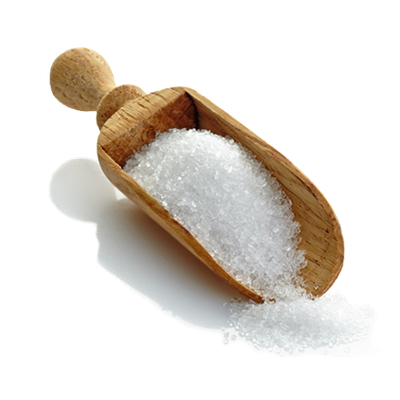
Are you skipping ice cream, cookies and candy bars to reduce your sugar intake? Great job!
But you are probably still eating more sugar than you realize. I know I was! I thought I was eating healthy and limiting sugar consumption for special occasions. When I learned about these hidden sources of sugar and how much is really added in our foods, I was angry and frustrated. I now read labels, limit sugar in my drinks and make conscious choices when dining out. And it is part of my mission to educate those that are trying to eat healthy and don’t realize how much sugar is in the foods they eat every day.
The American Heart Association recommends limiting sugar consumption to 6 teaspoons (25 grams) a day for women and 9 teaspoons (38 grams) a day for men.
But the average American is consuming approximately 22 teaspoons a day. How? Not only is it in foods that are obviously full of sugar (like donuts, cakes and other sweets), it is also found in foods that you might not suspect. Did you know that just one 12-ounce soda has 11 teaspoons (46.2 grams) of added sugar?
Eating sugar robs you of sustained energy and focus and can lead to cravings for more. It changes the flora of microbes in your gut and impacts your immune system function. This excess sugar is now related to many diseases like diabetes, heart disease, cancer, and Alzheimer’s disease.
Many different names of sugar
Sugar is hidden in many foods, even ones that you might not think are ‘sweet’. More than three-quarters of all processed foods you buy in the store contain added sugar in some shape or another. Sugar is added to foods to enhance the flavor, especially in low-fat products. It is added to whole-grain cereals, granolas and breakfast bars, yogurts, spaghetti sauce and many condiments like salad dressing and BBQ sauce. Even some fruit juices have added sugar.
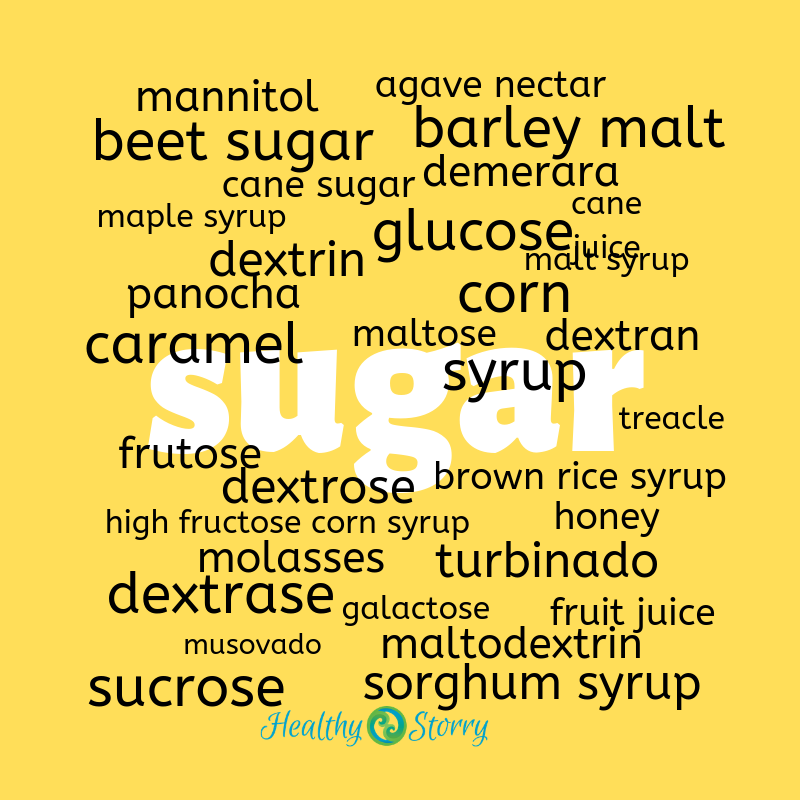
One reason it is hard to determine the sugar content in foods is that there are well over 60 names for sugar. Some you may recognize like cane sugar, honey and glucose; many you may not, like barley malt, dextran, maltodextrin, maltose, panela, rice bran syrup. This is why it is so important to read the nutrition label on packaging, and know the many names of sugar – some of which are in the picture to the right.
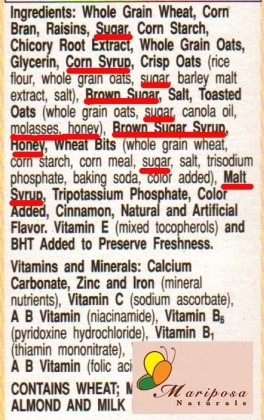
Another place to focus is the ingredients list. Generally, if some form of sugar appears as one of the first three ingredients, the food is considered high in sugar. But remember that there are over 60 names for sugar! Manufacturers will list those names separately, making it hard to determine how much sugar is really there, leading you to believe it is lower in sugar than it really is.
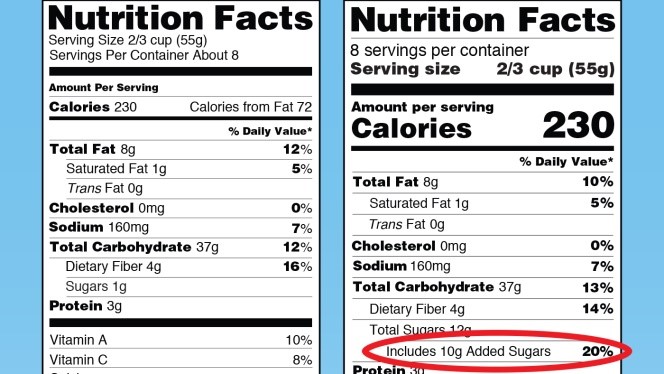
Companies are required to tell you about sugar content in foods but it can be confusing to read the labels if you don’t know where to look.
Starting in July 2018, most companies now must include an ‘added sugar’ category to their labels. This is a great place to start. The sugars included here are ones that are ADDED to foods, in addition to the naturally occurring sugar (like sugar added to applesauce).
Below is a chart of some common packaged foods and the added sugar content. Please be aware of the serving size. It can be very deceiving. Who eats only 2 tablespoons of peanut butter?
| Food | Serving Size | Sugar Content |
| Artesano Bakery Bread | 1 slice | 2 g (.5 teaspoons) |
| Skippy Peanut Butter | 2 TBSP | 4 g (1 teaspoons) |
| Nature’s Path Organic Honey Almond Granola | 1/3 cup | 7 g (1.75 teaspoons) |
| Multi Grain Cheerios | .75 cup | 9 g (2.25 teaspoons) |
| Prego Traditional Spaghetti Sauce | ½ cup | 10 g (2.5 teaspoons) |
| Simply Balanced Organic Grape Spread | 1 TBSP | 10 g (2.5 teaspoons) |
| Ken’s Fat Free Sun-Dried Tomato Vinaigrette | 2 TBSP | 12 g (3 teaspoons) |
| BBQ sauce (TJ’s Kansas City) | 2 TBSP | 13 g (3.25 teaspoons) |
| Kellogg’s Fruit Loops | 1 cup | 13 g (3.25 teaspoons) |
| Kellogg’s Smart Start Healthy Heart | 1.25 cup | 17 g (4.25 teaspoons) |
| Honey Nut Cheerios | 1.8 ounces | 18 g (4.5 teaspoons) |
| Larabar | 1.7 ounces | 18 g (4.5 teaspoons) |
| Yoplait Strawberry Yogurt | 6 ounce serving | 19 g (4.75 teaspoons) |
| Campbell’s tomato and sweet basil bisque | 1 cup | 24 g (6 teaspoons) |
| Snickers Bar | 1.86 ounces | 27 g (6.75 teaspoons) |
Hidden Liquid Sugar
Drinks are the largest source of added sugar in the American diet. Most people associate soft drinks with sugar, but don’t realize exactly how much. Some of them have as much as 47 grams of sugar per serving (Mello Yello). But fruit juices can have just as much sugar as a coke. Sports drinks, vitamin waters and energy drinks also contain a high amount of sugar. Flavored coffee and many iced teas also contain hidden sugar.
Below is a listing of common drinks and their sugar content. They are listed by the sugar content BY OUNCE. One of the problems with these drinks is the large serving sizes. My son could drink three of the 5.5 ounce apple juices at one time, if I let him. That would equal more than 13 teaspoons of sugar!
| Drink | Typical serving | Amount of sugar | Sugar per ounce (g) |
| Kombucha | 16.2 ounces | 16 g (4 teaspoons) | 1 |
| Vitamin water | 20 ounces | 32 g (8 teaspoons) | 1.6 |
| Gatorade Frost | 20 ounces | 34 g (8.5 teaspoons) | 1.7 |
| Chocolate Milk | 8 ounces | 22 g (5.5 teaspoons) | 2.8 |
| Simply Lemonade | 11.5 ounces | 36 g (9 teaspoons) | 3.1 |
| Arizona ice tea | 23 ounces | 72 g (18 teaspoons) | 3.1 |
| Tree Top Apple Juice | 5.5 ounces | 18 g (4.5 teaspoons) | 3.3 |
| Pepsi Cola | 12 ounces | 40 g (10 teaspoons) | 3.3 |
| Rockstar | 16 ounces | 62 g (15.5 teaspoons) | 3.9 |
Dining Out
Restaurants know that sugar makes food taste good, even in supposedly savory dishes. And it’s not as easy to determine how much added sugar is in a meal when you eat out. Aside from drinking sugar, condiments like BBQ sauce and ketchup, or salad dressings are most often loaded with hidden sugar.
| Entrée | Sugar (g) | Sugar (tsp) |
| Five Guys single cheeseburger | 8.5 g | 2.1 tsp |
| Applebee’s Honey BBQ Boneless Wings | 51 g | 12.75 tsp |
| California Pizza Kitchen Waldorf Chicken Salad | 55 g | 13.75 tsp |
| IHOP Cupcake Pancakes | 61 g | 15.25 tsp |
| Buffalo Wild Wings Asian Zing Boneless Wings, Large | 67 g | 16.75 tsp |
| P.F. Chang’s Orange Peel Chicken | 68 g | 17 tsp |
| Jamba Juice Island Pitaya Bowl | 70 g | 17.5 tsp |
| Chili’s Caribbean Salad with Grilled Chicken | 70 g | 17.5 tsp |
| Jamba Juice Strawberry Surf Rider 16 ounces | 70 g | 17.5 tsp |
| Panda Express 3-Entrée Plate (chow mein, sweetfire chicken, sweet and sour chicken and Beijing beef)* | 84 g | 21 tsp |
*get string bean chicken breast, broccoli beef and kung pao with brown rice and you would save 66 grams of sugar
My advice?
-
Watch sugar intake at breakfast and start off with unprocessed grains, fruits, nuts, eggs and vegetables
-
Rethink snacks with unflavored yogurts (add your own fruit/nuts for flavor), hard boiled eggs, nuts, vegetables with hummus
-
Drink things like herbal tea, coconut water, cactus water, fruit and/or vegetable infused water (like lemon, ginger, cucumber, strawberry)
-
Make your own sauces and dressings, or read labels carefully
-
If you have to have sugar, stick with unprocessed forms, like raw honey, maple syrup, molasses, and organic coconut sugar. Even a banana or apple sauce can be used as a sweetener
-
Don’t be afraid to ask your server about hidden sugar content of entrees you are considering





What i don’t realize is actually how you’re not actually much more smartly-preferred than you may be right now. You’re very intelligent. You know thus considerably on the subject of this subject, produced me personally imagine it from numerous numerous angles. Its like men and women don’t seem to be interested until it is something to accomplish with Girl gaga! Your personal stuffs excellent. All the time deal with it up!